Last updated: August 7, 2026 • 12 min read
It usually happens immediately after a heavy spell of the northeast monsoon. You leave your car parked for three days without driving it. When you finally open the door, you are met with a suffocating, musty stench, and to your horror, you see a fuzzy layer of white and green mold growing across your steering wheel, seatbelts, and fabric seats.
Discovering mold in your car is alarming. Not only does it ruin the appearance and smell of your interior, but breathing in concentrated mold spores in a closed cabin is a serious respiratory health hazard.
In a coastal, humid city like Chennai, mold can spread across a car interior in less than 48 hours. In this guide, we'll explain exactly why this happens, how to safely remove it, and how to stop it from ever coming back.
Quick Answer
To permanently remove mold from your car interior:
• Protect Yourself: Wear an N95 mask and gloves before cleaning.
• Kill the Spores: Spray a solution of white vinegar and water (not bleach) directly onto the mold. Let it sit for 15 minutes.
• Extract: Scrub gently and use a wet vacuum to extract the moisture.
• Sanitize the AC: Run an ozone generator or use a high-pressure steam cleaner on the AC vents.
• Dry Completely: Run the car heater on full blast with the windows rolled up for 20 minutes to eliminate any remaining moisture.
Table of Contents
- Why Cars Breed Mold in Chennai
- Symptoms vs. Cause vs. Solution
- Safe DIY Mold Removal
- Problems We Commonly See in Chennai
- When You Need a Professional
- Real Mobile Car Spa Experience
- Prevention Checklist
- Frequently Asked Questions (FAQ)
Why Cars Breed Mold in Chennai
Mold requires three things to grow: moisture, warmth, and organic food (like dust, dead skin cells, or spilled food). Chennai provides the perfect storm for all three.
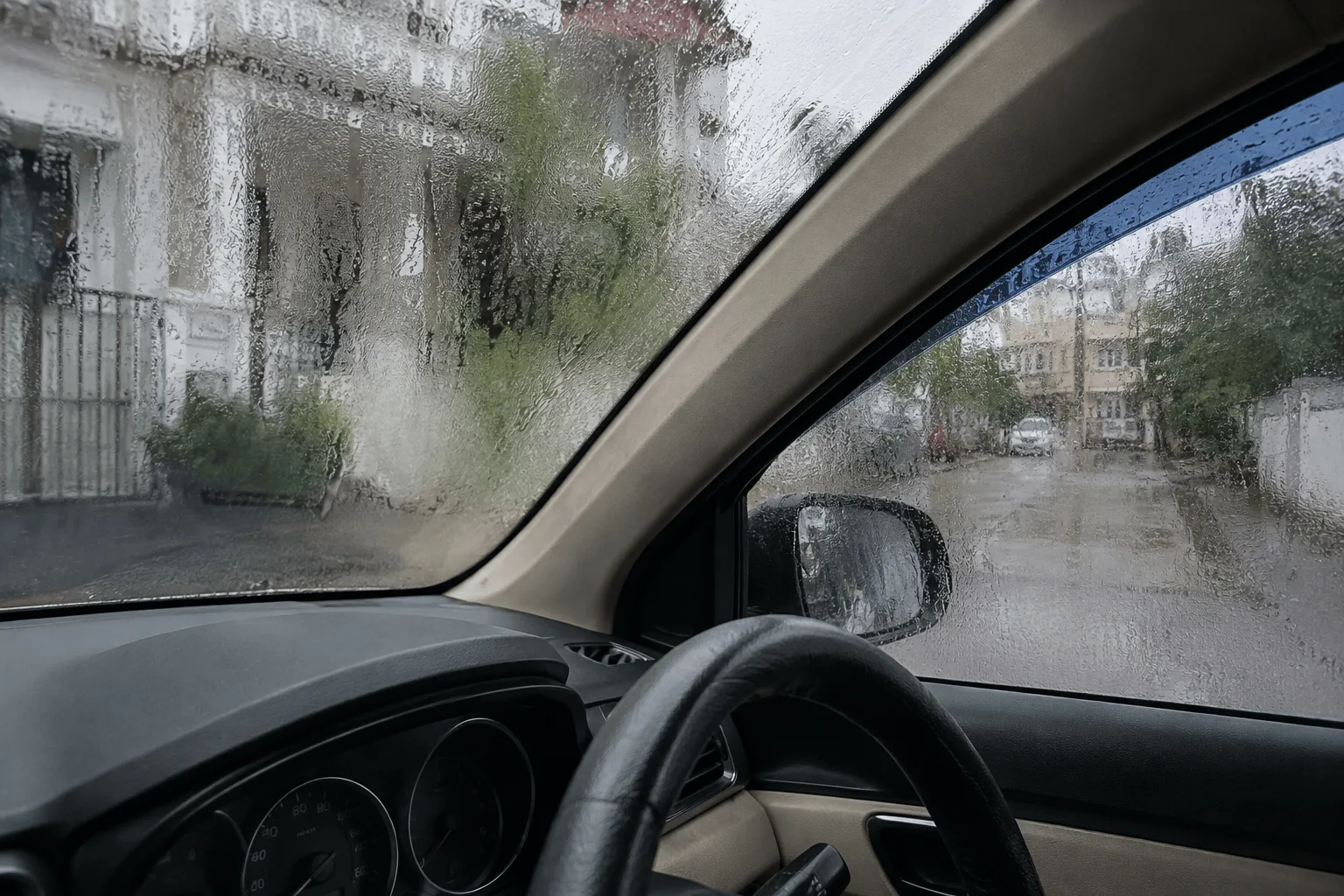
When it rains in Chennai, we frequently track muddy water into our cars on our shoes and umbrellas. Because of the extreme coastal humidity, that moisture cannot naturally evaporate from the thick floor carpets.
When the sun suddenly returns after a downpour, the temperature inside a closed car parked in areas like OMR or GST Road quickly spikes past 50°C. The trapped moisture turns into heavy condensation, effectively transforming your cabin into a giant, high-heat terrarium. Within 48 hours, microscopic mold spores floating in the air settle onto your seats and begin multiplying rapidly.
Symptoms vs. Cause vs. Solution
Identifying the source of the mold is the first step to permanently removing it.
| Symptom |
Likely Cause |
Recommended Solution |
| White fuzz on seatbelts/steering wheel |
High ambient cabin humidity |
Vinegar wipe-down + run the heater to dry the cabin. |
| Mold patches under floor mats |
Wet shoes/umbrella water trapped |
Hot water extraction + heavy-duty rubber mats. |
| Sour mold smell from AC vents |
Mildew on AC evaporator coil |
High-pressure steam cleaning + AC filter replacement. |
| Green mold on fabric seats |
Spilled liquid/food left untreated |
Enzyme cleaner + deep interior extraction. |
| Mold in the trunk |
Leaking trunk seal during monsoon |
Mechanic repair + ozone treatment. |
Safe DIY Mold Removal
If you catch a mold outbreak early and it is contained to surface areas, you can safely remove it at home. Never use bleach on car interiors. Bleach can discolor your seats and degrade plastic trims.
What you need:
- N95 Mask and Nitrile Gloves (Do not breathe in the spores).
- Distilled White Vinegar (kills 82% of mold species).
- A spray bottle filled with a 1:1 mixture of vinegar and water.
- Several clean microfiber cloths.
The Process:
- Spray, Don't Scrub: Lightly mist the vinegar solution directly onto the mold. Do not scrub it dry immediately, as this releases the spores into the air.
- Let it dwell: Allow the vinegar to sit for 10-15 minutes to penetrate and kill the mold structure.
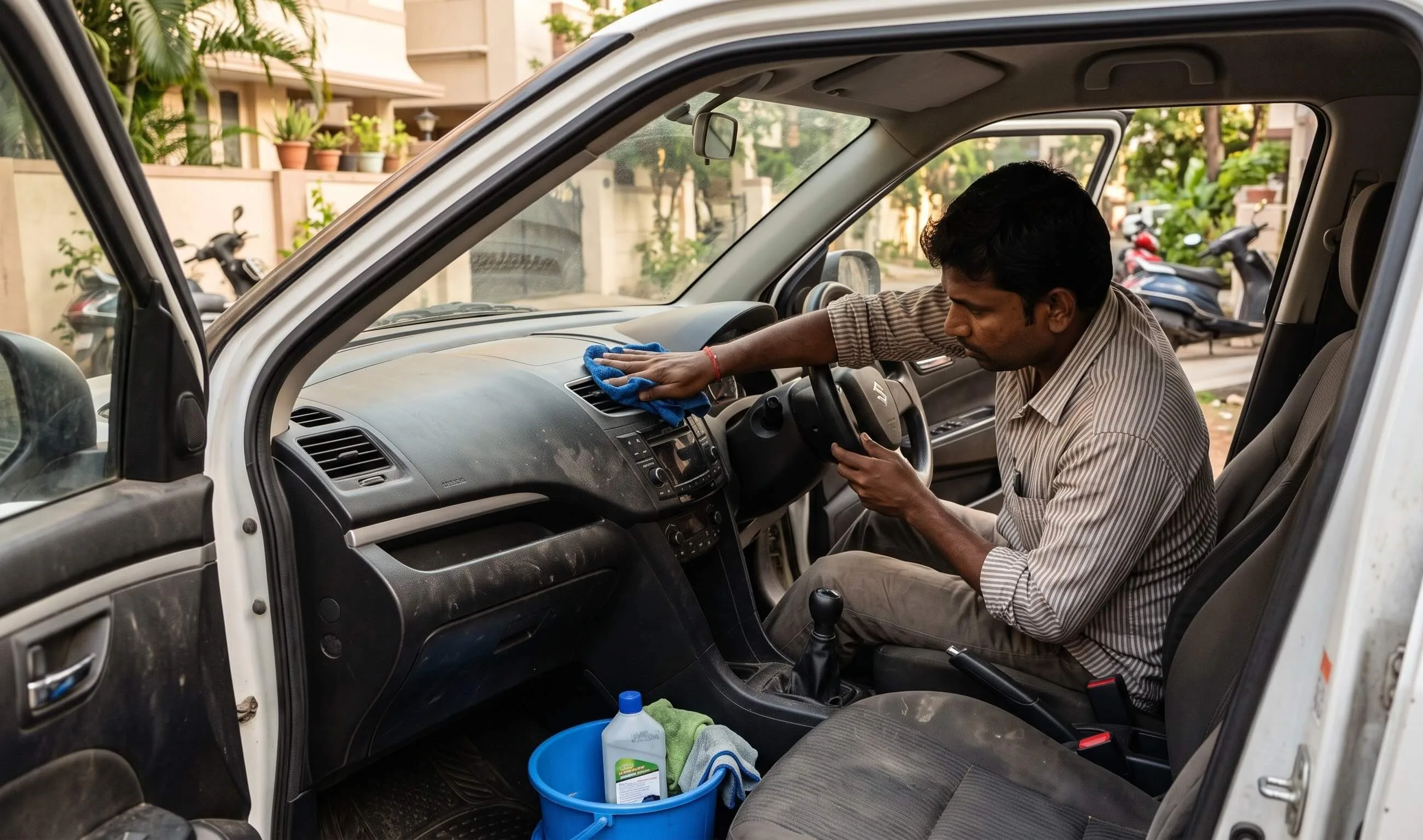
- Wipe away: Use a damp microfiber cloth to wipe the dead mold away. Fold the cloth frequently and immediately throw it in the washing machine on high heat afterward.
- Dry the cabin: Start the car, roll up the windows, and run the floor heater on full blast for 15-20 minutes to bake out any remaining moisture.
Problems We Commonly See in Chennai
During interior detailing jobs across Velachery, T Nagar, and ECR, we frequently encounter the exact same environmental wear and tear on vehicles used for daily commuting:
- Hidden Floor Mold: Mold growing unseen beneath heavy fabric floor mats immediately after the northeast monsoon.
- Seatbelt Spores: White, dusty mold spores blooming along retracted seatbelts due to high cabin humidity.
- Evaporator Mildew: A deeply entrenched mold colony living on the AC evaporator core caused by turning the car off while the AC compressor is still dripping wet.
- Sunroof Leaks: Blocked sunroof drain channels that flood the headliner, causing massive mold outbreaks on the roof interior.
When You Need a Professional
Mold is incredibly resilient. If you only clean the visible surface but leave the "roots" embedded in the seat foam, the mold will simply grow back the next time the humidity spikes.
You should call a professional interior detailing team if:
- The mold covers more than a small, isolated area.
- The mold is growing inside the porous foam of your fabric seats.
- The AC smells intensely like a wet towel when turned on.
- You experience allergic reactions, coughing, or sneezing while driving.
- The mold returned a week after you performed a DIY cleaning.
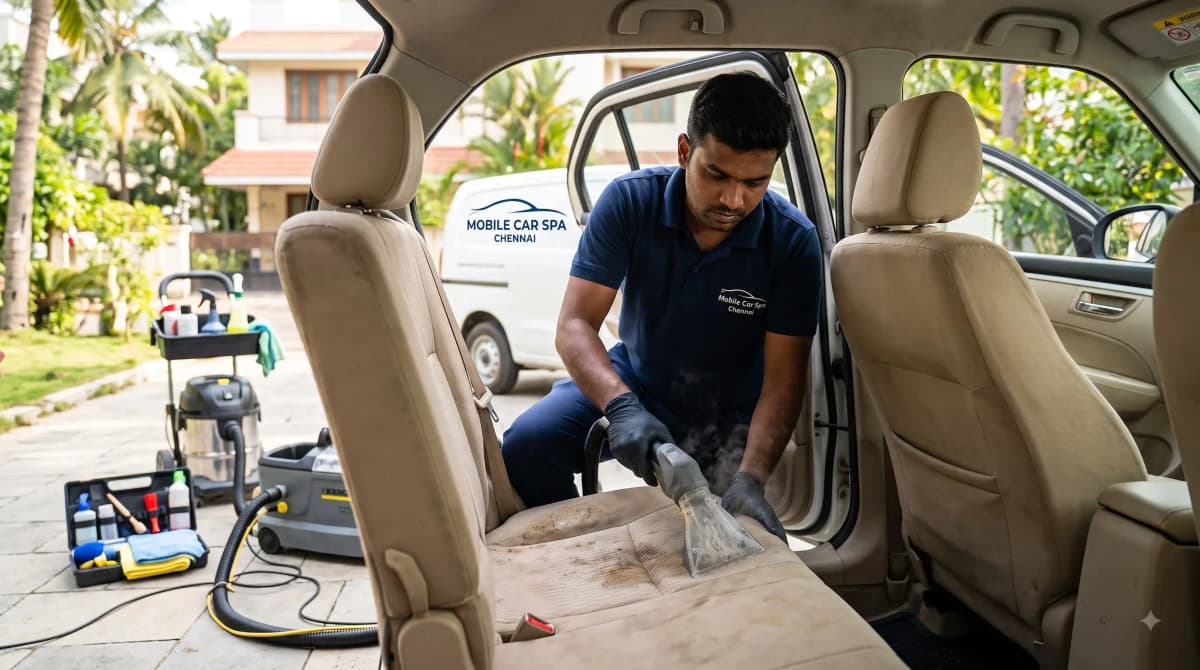
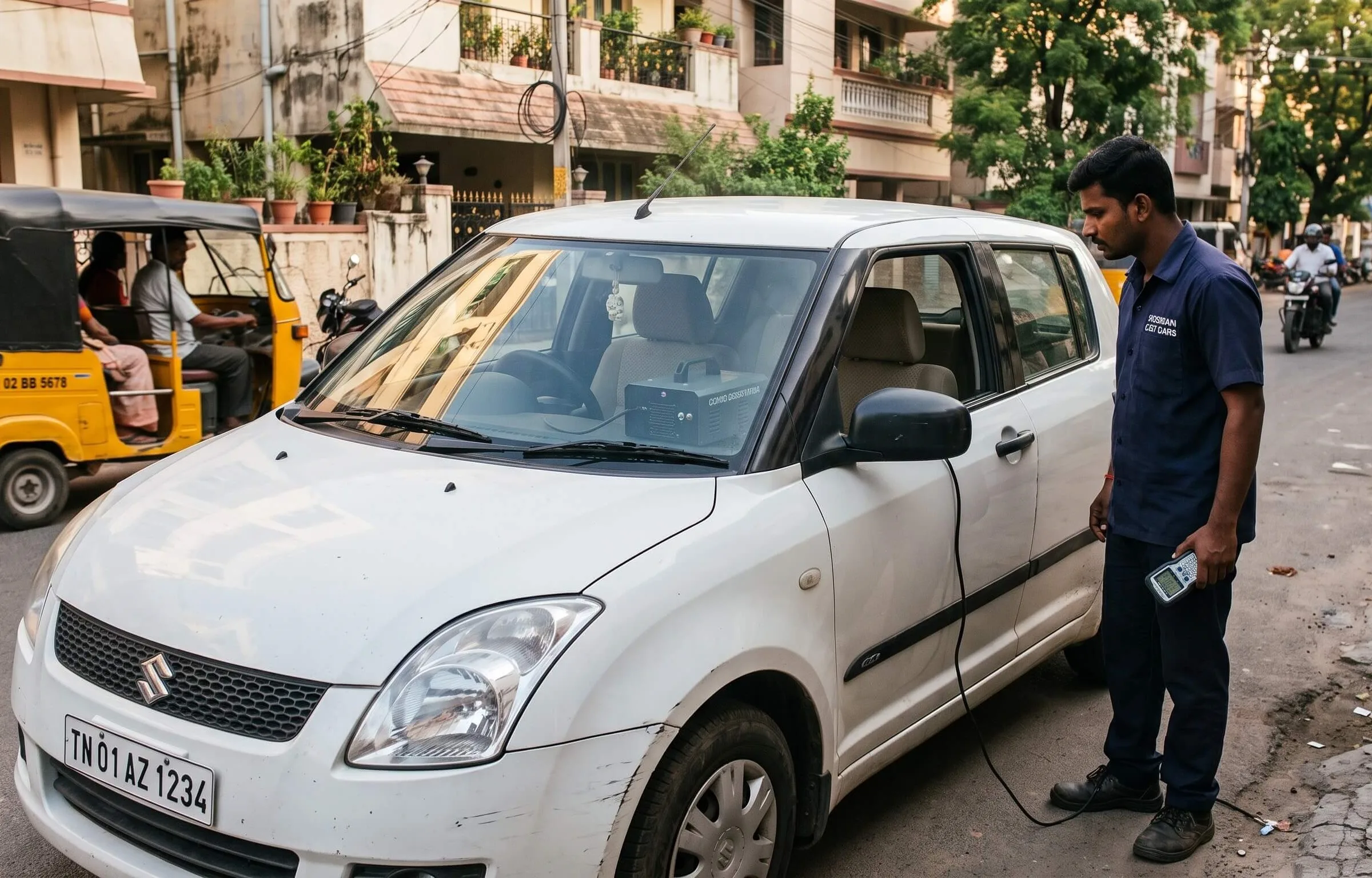
Professional detailers use Hot Water Extractors to pull mold out of the deep layers of seat cushions, and Ozone Generators (O3) to chemically destroy airborne mold spores circulating in the AC system.
Real Mobile Car Spa Experience
Last November, following a week of heavy cyclonic rain in Chennai, we received an emergency call from a client in Sholinganallur. They had left a rear window cracked less than half an inch to "air out" the car while parked under a tree. Water got in, soaked the rear seats, and within a week, the entire back row was covered in thick green mold.
The client attempted to wipe it away with a household glass cleaner, but the mold returned three days later and the car smelled uninhabitable.
When our mobile team arrived, we immediately put on respirators. We treated the seats with a professional-grade enzyme cleaner to break down the organic mold structure. We then used a high-powered hot water extractor, injecting 90°C water deep into the seat foam and extracting gallons of dark, mold-infested water. Finally, we sealed the cabin and ran an ozone generator for an hour to kill all remaining airborne spores.
The mold never returned, and the client avoided having to replace their entire rear seat assembly.
Prevention Checklist
Preventing mold in Chennai is entirely about moisture management.
- Run the AC correctly: Turn off the AC compressor (the AC button) two minutes before parking your car, but leave the fan blowing. This dries the condensation off the evaporator coil.
- Use All-Weather Mats: During the monsoon, swap fabric mats for rubber ones that don't absorb water.
- Fix Leaks Immediately: If you notice damp carpets near the doors, have your door seals and sunroof drains checked by a mechanic.
- Use Moisture Absorbers: Keep a silica gel pack or a dedicated car dehumidifier bag under the front seats during the monsoon season.
Frequently Asked Questions (FAQ)
Can I use bleach to remove mold from my car seats?
No. Bleach is highly corrosive and will discolor your fabric or leather seats. Furthermore, bleach only kills surface mold; it does not penetrate porous materials like seat foam, meaning the mold will eventually grow back. White vinegar is a much safer and more effective alternative.
Is it safe to drive a car with mold in it?
No. Driving in a closed cabin with active mold growth exposes you to a high concentration of airborne spores. This can trigger asthma, severe allergies, respiratory infections, and eye irritation. You should wear an N95 mask while cleaning it or hire a professional.
How do I get mold out of my car AC vents?
Mold in the AC system cannot be reached with a simple wipe-down. You must replace the cabin air filter first. Then, a professional must use high-pressure steam to sanitize the vents and run an ozone generator to chemically destroy the spores living on the evaporator coil.
Why did mold grow in my car when the windows were closed?
Moisture was already trapped inside. Wet shoes, a damp umbrella, or a spilled drink absorbed into the carpets will evaporate when the interior heats up during the day. Because the windows are closed, that humidity cannot escape, creating the perfect greenhouse for mold to grow.
How much does professional car mold removal cost in Chennai?
The cost depends on how deeply the mold has penetrated. A standard deep interior detailing starts around ₹1,500 - ₹2,500. However, severe mold infestations that require extensive hot water extraction, steam sanitization, and heavy ozone treatments may cost more due to the intensive labor required.
Consult with Our Interior Experts
If your car is suffering from a mold outbreak, do not risk your respiratory health by breathing in the spores or attempting to mask the smell with perfume.
If you're unsure whether the smell is caused by mold, food spills, AC bacteria, or trapped moisture, our team can inspect your vehicle at your home or office anywhere in Chennai and recommend the most appropriate treatment—without selling you unnecessary services. We’ll identify exactly where the mold is hiding and use our professional extractors, steam cleaners, and ozone generators to permanently eliminate it, leaving your cabin smelling fresh and hygienic.
Contact Mobile Car Spa today to book your personalized doorstep interior detailing service.
Related Articles